Adaptive step goals vs a flat 10,000 steps
The most famous number in fitness was invented to sell pedometers. Here's a better way to set a target.
Almost everyone with a phone knows the number: 10,000 steps a day. It's the default goal on most trackers and the figure people quote as if it were handed down by science. It wasn't.
Where 10,000 steps really came from
The target traces back to 1960s Japan and a pedometer called the manpo-kei, literally "10,000-steps meter," sold around the era of the 1964 Tokyo Olympics. The name was chosen partly because the Japanese character for 10,000 (万) looks a little like a walking person, and partly because it was a round, motivating figure. In other words, 10,000 was a brand name, not the result of a clinical trial.
None of that means walking is overrated. The opposite is true. It just means the specific number you've been chasing was marketing, and treating it as a universal law does more harm than good when it makes a 6,000-step day feel like it "didn't count."
What the research broadly suggests
Later studies painted a more encouraging picture than the round number implies. Research on step counts and health outcomes has generally found that the benefits climb steadily from just a few thousand steps a day and start to level off somewhere in the region of 7,000 to 10,000 for many adults, with the sweet spot varying by age and fitness. The headline most researchers land on: more than you do now is the target that matters, not a magic figure. (This is general information, not medical advice. If you have specific concerns, talk to a professional.)
Why one flat number doesn't fit everyone
A single fixed goal has two failure modes. Set it too high and a naturally lighter walker never hits it, so the streak dies and the app gets deleted. Set it too low and a busy commuter blows past it by lunch, so it stops meaning anything. Either way, a number that ignores you stops being motivating within a week.
The case for an adaptive goal
An adaptive goal fixes this by moving with you. It looks at your recent activity and sets a target a little beyond your current average: high enough to be worth reaching, low enough to be reachable. Have a big week and it nudges up; hit a rough patch and it eases off, so one bad week doesn't turn into three. It's the principle a good coach uses: progressive, personal, forgiving.
How Flyback does it
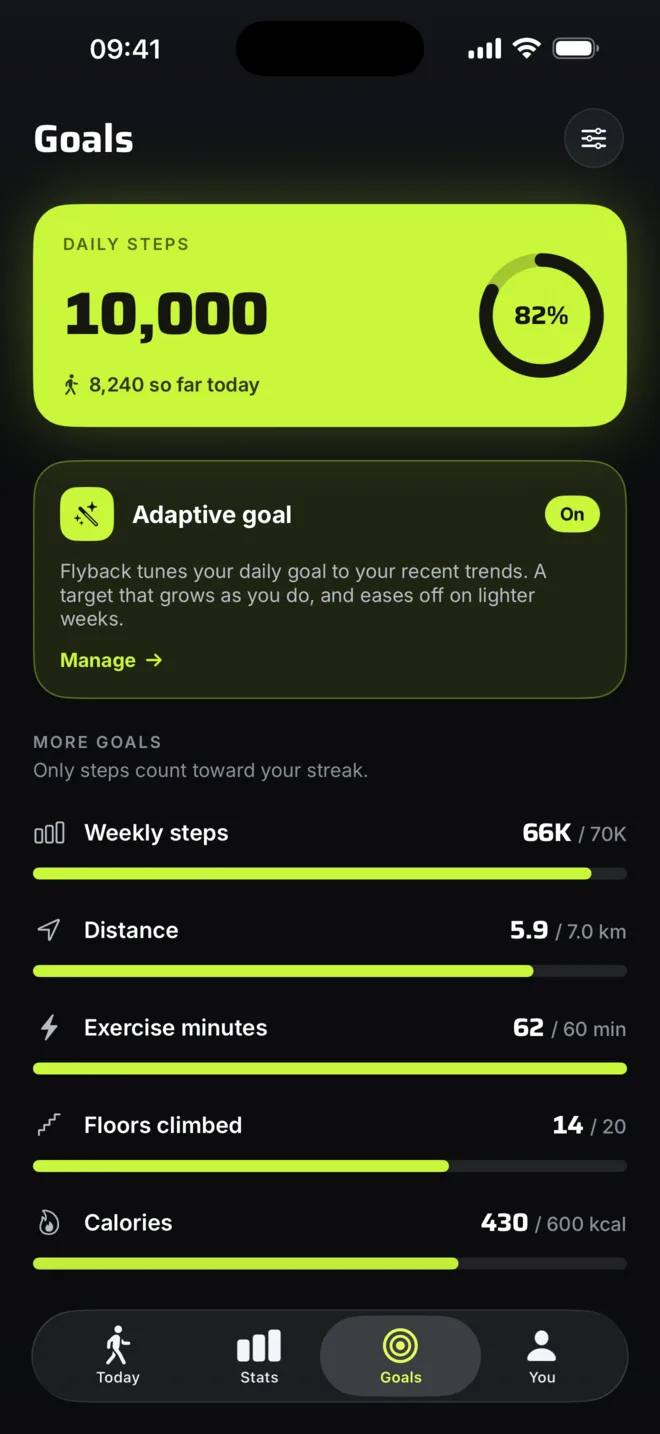
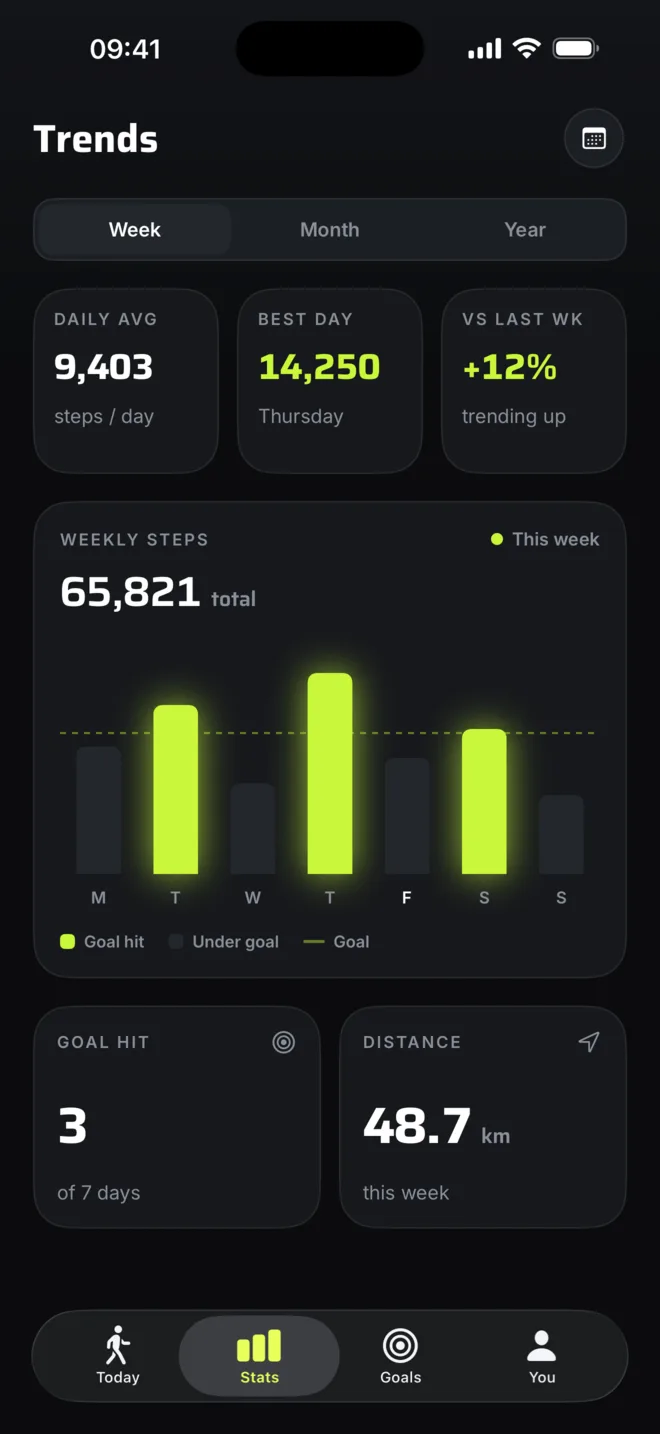
In Flyback, you can keep a classic fixed target if you like round numbers, or switch on adaptive goals and let the app tune your daily target to your recent trends. It grows as you do and eases off on lighter weeks. And because Flyback's streak counts only the days you actually hit your goal, an honest, well-set target is what makes the streak worth keeping. Steps, distance, exercise minutes, floors and calories can each carry their own weekly goal, so the target fits your life rather than the other way round.
Set the number that fits you, then beat it. For the basics, see how to count steps on your iPhone, or read about choosing a step counter app.